Selecting a steel pipe looks simple until a specification contains terms such as NPS 4, DN 100, Schedule 40, Schedule 80, STD, XS, or XXS.
For industrial buyers, these terms are not small technical details. A misunderstanding of steel pipe schedule can lead to the wrong wall thickness, incorrect fitting compatibility, unnecessary pipe weight, welding problems, or material that cannot meet the intended project conditions.
The most important point is this:
Pipe schedule does not describe the outside diameter of a pipe. It primarily identifies a standardized wall-thickness series for a given nominal pipe size.
This guide explains how steel pipe schedule works, why the same schedule does not mean the same wall thickness at every pipe size, and what procurement teams should check before issuing an RFQ.
Table of Contents
What Does Steel Pipe Schedule Mean?
A steel pipe schedule is a standardized way of identifying pipe wall-thickness series.
Common schedule designations include:
- Schedule 10
- Schedule 20
- Schedule 30
- Schedule 40
- Schedule 60
- Schedule 80
- Schedule 100
- Schedule 120
- Schedule 140
- Schedule 160
Depending on pipe material and applicable standard, buyers may also encounter designations such as:
- STD
- XS
- XXS
- 5S
- 10S
- 40S
- 80S
The schedule number itself is not the wall thickness in millimeters or inches.
For example, Schedule 40 does not mean that every pipe has the same wall thickness. A small-diameter Schedule 40 pipe and a large-diameter Schedule 40 pipe can have very different walls.
That is why a correct steel pipe order should never state only:
“Schedule 40 pipe.”
The nominal size must also be provided.
Why Pipe Schedule Matters in Industrial Procurement
The selected steel pipe schedule affects several important properties of the finished piping system.
Wall Thickness
This is the most obvious effect.
For a given nominal pipe size, a higher schedule usually means a thicker wall.
Internal Diameter
The outside diameter normally remains fixed for a particular NPS, while the wall becomes thicker.
As a result, increasing the schedule decreases the available internal diameter.
Pipe Weight
A thicker wall means more steel per unit length.
This influences:
- Transportation planning
- Lifting requirements
- Pipe support loads
- Fabrication handling
- Structural design
Welding
Wall thickness affects:
- Weld bevel preparation
- Number of weld passes
- Heat input
- Welding procedure requirements
- Preheat requirements in some materials
- Inspection requirements
Fitting Compatibility
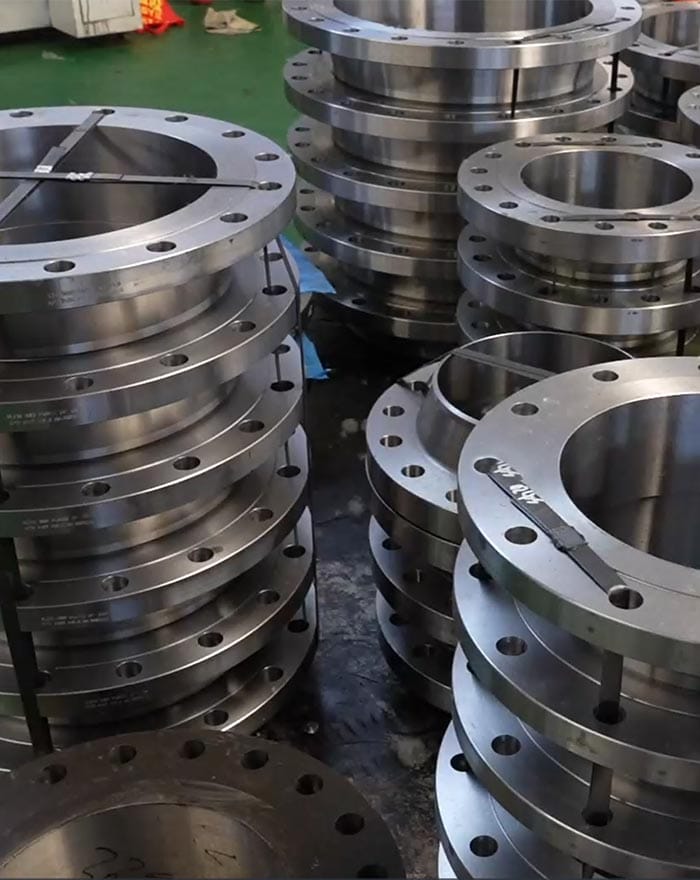
Elbows, tees, reducers and weld neck flanges must be selected to suit the connected pipe dimensions.
When sourcing a complete pipeline package, buyers can review the available industrial pipe fittings and steel pipe products together rather than treating each component independently.
NPS, DN and Actual Pipe Diameter Are Not the Same Thing
One of the biggest sources of procurement errors is assuming that nominal pipe size equals actual outside diameter.
It does not always work that way.
What Is NPS?
NPS means Nominal Pipe Size.
It is a standardized size designation used extensively in industrial piping.
For many common sizes, the NPS number should be understood as a nominal designation rather than a direct measurement of the pipe outside diameter.
What Is DN?
DN means Diameter Nominal.
It is a metric nominal designation commonly used alongside international piping standards.
NPS and DN are often paired approximately, such as:
| NPS | Common DN Designation |
|---|---|
| NPS 1 | DN 25 |
| NPS 2 | DN 50 |
| NPS 3 | DN 80 |
| NPS 4 | DN 100 |
| NPS 6 | DN 150 |
| NPS 8 | DN 200 |
| NPS 10 | DN 250 |
| NPS 12 | DN 300 |
These values are nominal system designations.
A buyer should therefore use the applicable dimensional standard rather than converting them as if they were exact measured diameters.
Why This Matters
Imagine a purchase request stating:
“100 mm Schedule 40 steel pipe.”
Does “100 mm” mean:
- DN 100?
- 100 mm actual outside diameter?
- 100 mm inside diameter?
These are not necessarily the same product.
A more complete specification would state something similar to:
DN 100 / NPS 4, Schedule 40, applicable dimensional standard, specified material grade.
Steel Pipe Schedule 40 Explained
Steel pipe schedule 40 is one of the most frequently encountered schedule designations in industrial, utility and construction piping.
It is often used because it provides a practical wall thickness for many general applications.
However, Schedule 40 should never be interpreted as an automatic recommendation for a project.
The correct steel pipe schedule must come from engineering requirements.
Typical Uses
Depending on material, design standard and service conditions, Schedule 40 pipe may be found in:
- Water piping
- General industrial systems
- Compressed air systems
- Process utility piping
- Fire protection systems
- Mechanical installations
- Fabricated piping assemblies
Does Schedule 40 Always Have the Same Wall Thickness?
No.
This is one of the most important concepts in this entire guide.
The wall thickness associated with Schedule 40 changes according to nominal pipe size.
Therefore:
NPS 2 Schedule 40 ≠ NPS 8 Schedule 40 wall thickness.
Always verify the actual dimensional table for the required NPS.
Steel Pipe Schedule 80 Explained
Steel pipe schedule 80 generally provides a thicker wall than Schedule 40 for the same applicable nominal pipe size.
Because the outside diameter remains associated with the nominal size, the thicker wall reduces the internal diameter.
Schedule 80 may be considered where the engineering specification requires additional wall thickness.
Possible reasons include:
- Higher calculated design requirements
- Mechanical allowance
- Corrosion allowance
- Threading requirements in applicable systems
- More demanding project specifications
- Specific industrial service requirements
The important phrase here is engineering specification.
A higher steel pipe schedule should not be selected simply because it “sounds stronger.”
Schedule 40 vs Schedule 80: What Actually Changes?
This comparison is frequently misunderstood.
| Factor | Schedule 40 | Schedule 80 |
| Outside diameter at same NPS | Generally unchanged | Generally unchanged |
| Wall thickness | Thinner | Thicker |
| Internal diameter | Larger | Smaller |
| Pipe mass per length | Lower | Higher |
| Welding volume | Generally lower | Generally higher |
| Flow area | Larger | Smaller |
| Fabrication handling | Generally easier | Heavier pipe handling |
| Selection basis | Engineering requirement | Engineering requirement |
The Outside Diameter Principle
For the same nominal pipe size, changing steel pipe schedule usually changes the wall inward rather than changing the standardized outside diameter.
This principle is important because components such as:
- Pipe supports
- Clamps
- External coatings
- Certain fittings
may interface with the pipe outside diameter.
The Internal Diameter Difference
A thicker wall reduces the bore.
That can affect:
- Flow velocity
- Pressure loss
- Fluid volume
- Pigging requirements
- Cleaning access
- Instrument connections
Therefore, changing from Schedule 40 to Schedule 80 without reviewing hydraulic calculations can influence system performance.
Does a Higher Steel Pipe Schedule Mean Higher Pressure?
Not automatically.
This is another major procurement misconception.
A thicker wall can contribute to increased pressure capability under appropriate conditions, but steel pipe schedule alone is not a pressure rating.
Pressure design also depends on factors such as:
- Pipe outside diameter
- Actual wall thickness
- Material grade
- Allowable material stress
- Design temperature
- Corrosion allowance
- Manufacturing tolerance
- Weld quality
- Design code
- Joint efficiency where applicable
- Service conditions
Temperature Is Critical
Steel properties change with temperature.
A pipe that meets a particular design requirement at moderate temperature cannot automatically be assumed to have identical allowable conditions at elevated temperature.
This is why buyers should avoid requesting:
“Schedule 80 for high pressure”
without providing:
- Design pressure
- Design temperature
- Material specification
- Applicable piping code
The correct steel pipe schedule is normally the result of engineering design, not a substitute for it.
How ASME B36.10 Relates to Steel Pipe Schedule
One of the most important dimensional references for carbon and alloy steel piping is ASME B36.10.
The standard addresses dimensions for welded and seamless wrought steel pipe used across different pressure and temperature applications.
For procurement teams, its practical importance is that it provides standardized dimensional relationships between items such as:
- Nominal pipe size
- Outside diameter
- Wall thickness
- Schedule designation
A steel pipe schedule should therefore be checked against the applicable dimensional standard rather than copied from an old quotation or unrelated project.
Why Standard Tables Matter
A schedule number without a nominal size is incomplete.
Likewise, nominal size without wall thickness or schedule may be insufficient where multiple wall series are available.
The safest RFQ format clearly states both.
Seamless Steel Pipe and Pipe Schedule
The schedule system is commonly used when specifying Seamless Steel Pipe for industrial projects.
A typical seamless pipe inquiry may need to identify:
- NPS or DN
- Steel pipe schedule
- Material grade
- Manufacturing standard
- Length
- End condition
- Quantity
- Testing requirements
- Surface condition
- Documentation requirements
ASTM A106 Applications
ASTM A106/A106M is an important specification for seamless carbon steel pipe used in high-temperature service.
When ASTM A106 pipe is required, buyers still need to define dimensional information such as nominal size and wall thickness.
The material specification and steel pipe schedule perform different functions:
Material specification: defines material and manufacturing/testing requirements.
Dimensional standard: defines standardized pipe dimensions.
Schedule: identifies the applicable wall-thickness series.
These should not be treated as interchangeable terms.
Schedule vs Wall Thickness: Which Should Be on the RFQ?
Ideally, a professional RFQ should remove ambiguity by making the dimensional requirement clear.
There are several possible approaches.
Method 1: Specify the Schedule
Example:
NPS 6, Schedule 40
This is practical when the project follows a recognized schedule-based dimensional system.
Method 2: Specify Actual Wall Thickness
Example:
NPS 6, WT = project-specified value
This may be necessary where the engineering design uses a wall thickness that is not best communicated using a standard schedule designation.
Method 3: Provide Both
For critical orders, buyers may provide:
NPS + Schedule + required wall thickness
This allows the supplier to cross-check the requirement.
Which Approach Is Better?
The project specification takes priority.
The main objective is to prevent a supplier from guessing which steel pipe schedule or thickness was intended.
How Corrosion Allowance Affects Pipe Wall Selection
Industrial piping is not always designed only for its initial operating condition.
Some systems expect gradual metal loss during service.
This is where corrosion allowance becomes important.
What Is Corrosion Allowance?
Corrosion allowance is additional wall thickness included to account for expected material loss during the service life of the pipe.
The required allowance depends on factors such as:
- Fluid chemistry
- Water content
- Temperature
- Corrosive gases
- External environment
- Coating system
- Inspection strategy
- Intended service life
Schedule Should Follow the Engineering Calculation
The design process may produce a required minimum thickness.
Engineers can then select a commercially available steel pipe schedule that satisfies the requirement after considering tolerances and allowances.
This is why the correct sequence is:
Design requirement → required wall thickness → suitable schedule
not:
Choose a schedule first → hope it meets the design requirement.
Pipe Schedule and Flow Capacity
Increasing wall thickness changes the internal pipe diameter.
For the same outside diameter:
- Thicker wall = smaller bore
- Smaller bore = smaller internal flow area
This can influence fluid velocity.
Why Buyers Should Care
A procurement substitution from one steel pipe schedule to another may appear harmless because the outside diameter remains compatible with many external components.
But the smaller internal diameter can change system hydraulics.
Potential effects include:
- Increased fluid velocity
- Increased friction losses
- Different pump operating conditions
- Different pressure drop
- Greater erosion risk in some services
- Reduced flow capacity
Any schedule substitution should therefore be reviewed by the responsible engineer.
Pipe Schedule and Butt-Weld Fittings
Pipe schedule becomes particularly important when purchasing a complete butt-weld piping system.
The connected products may include:
- Elbows
- Tees
- Reducers
- Weld neck flanges
- Prefabricated pipe spools
The pipe and fitting ends need compatible wall dimensions for proper fit-up.
Reducers
A reducer may connect different pipe sizes while also needing to match the wall requirements at both ends.
The previous guide on concentric vs eccentric reducer selection explains how reducer geometry affects piping layouts.
For procurement, geometry is only part of the specification. Wall-thickness compatibility must also be confirmed.
Weld Neck Flanges
A weld neck flange has a bore that should suit the connected pipe specification.
If the pipe schedule is omitted, the flange bore may not match the intended pipe wall.
This can create:
- Internal mismatch
- Difficult weld fit-up
- Additional machining
- Unplanned transition requirements
A complete pipeline RFQ should therefore coordinate pipe, flange and fitting specifications together.
Steel Pipe Schedule and Pipe Supports
Changing pipe wall thickness also changes pipe mass.
This becomes important in support design.
A higher steel pipe schedule generally increases the weight of the pipe itself.
After adding:
- Fluid contents
- Insulation
- Valves
- Flanges
- Branch connections
the total support load can become significantly different from a thinner-wall system.
For major projects, changing schedule after support design has been completed may require additional engineering review.
The same applies to:
- Spring supports
- Hangers
- Pipe shoes
- Structural steel
- Guides
- Anchors
Wall-thickness substitutions should therefore be communicated to the piping and structural teams rather than treated as a purchasing-only decision.
Common Steel Pipe Schedule Procurement Mistakes
Many pipe supply problems begin with an incomplete RFQ rather than a manufacturing defect.
Mistake 1: Ordering by Outside Diameter Only
Industrial pipe is normally specified using the applicable pipe sizing system.
An outside-diameter-only request can create confusion between pipe and tube products.
Mistake 2: Writing Only “Schedule 40”
Schedule alone is incomplete without nominal pipe size.
Mistake 3: Assuming Schedule 40 Has One Thickness
It does not.
Wall thickness varies according to nominal pipe size.
Mistake 4: Treating Schedule as Pressure Rating
Steel pipe schedule contributes to dimensional selection but does not independently define the allowable working pressure.
Mistake 5: Ignoring Material Grade
Schedule 80 carbon steel pipe and Schedule 80 stainless steel pipe are not interchangeable simply because the nominal dimensions look similar.
Mistake 6: Forgetting Temperature
Pressure design depends on the material’s allowable properties at the specified design temperature.
Mistake 7: Changing Schedule Without Checking Fittings
A thicker pipe may require different fitting wall dimensions or flange bore requirements.
Mistake 8: Ignoring Corrosion Allowance
The selected pipe must satisfy the required minimum wall after all relevant allowances and tolerances are considered.
Mistake 9: Confusing Pipe With Tube
Pipe and tube dimensional systems are not automatically interchangeable.
Mistake 10: Accepting Substitutions Without Engineering Review
Changing from one steel pipe schedule to another affects weight, bore, flow and welding.
A substitute should be technically reviewed before approval.
What Should Be Included in a Steel Pipe RFQ?
A strong RFQ allows suppliers to quote the correct product without making assumptions.
Basic Product Information
Include:
- Seamless or welded construction
- NPS or DN
- Steel pipe schedule or wall thickness
- Material specification
- Grade
- Quantity
- Required length
Service Conditions
For technical review where appropriate, provide:
- Design pressure
- Design temperature
- Operating medium
- Corrosion environment
- Low-temperature requirement
- Sour-service requirement
- Other project-specific conditions
End Preparation
Specify requirements such as:
- Plain end
- Beveled end
- Threaded end where applicable
- Special machining requirements
Surface Protection
Depending on the project:
- Bare steel
- Temporary protective coating
- Painting
- External corrosion protection
- Project-specific coating system
The company also supplies products such as 3PE steel pipe and other steel pipe configurations for different pipeline requirements.
Inspection and Documentation
Possible requirements include:
- Material test certificate
- Chemical composition report
- Mechanical properties
- Hydrostatic testing
- Nondestructive testing
- Dimensional inspection
- Heat-number traceability
- Third-party inspection
- Packing list
- Project-specific quality documents
A Practical Steel Pipe Schedule Selection Workflow
Procurement teams can reduce specification errors by following a consistent sequence.
Step 1: Confirm the Applicable Design Code
Do not select schedule from habit or from another unrelated project.
Step 2: Confirm Design Pressure and Temperature
These are fundamental engineering inputs.
Step 3: Confirm Material Grade
Different materials have different allowable properties.
Step 4: Calculate the Required Wall Thickness
This should be completed according to the applicable engineering method and project code.
Step 5: Add Required Allowances
These may include:
- Corrosion allowance
- Mechanical allowance
- Manufacturing tolerance considerations
Step 6: Select a Suitable Standard Wall Series
Choose a commercially appropriate steel pipe schedule that satisfies the engineering requirement.
Step 7: Check Hydraulic Impact
Confirm that the resulting internal diameter is acceptable.
Step 8: Coordinate Fittings and Flanges
Make sure all connected components match the selected pipe wall.
Step 9: Confirm Procurement Availability
Availability can vary according to:
- Diameter
- Material
- Schedule
- Quantity
- Manufacturing standard
Step 10: Freeze the RFQ Specification
The final purchase description should be technically complete before the order is released.
Quick Steel Pipe Schedule Buyer Checklist
Before sending an inquiry, verify the following:
| Item | Confirm Before RFQ |
| Pipe construction | Seamless or welded |
| Nominal size | NPS or DN |
| Wall specification | Schedule or exact wall thickness |
| Material | Full material specification |
| Grade | Required grade |
| Standard | Applicable manufacturing/dimensional standard |
| Length | Fixed or project-required length |
| Ends | Plain, beveled or other |
| Surface | Required finish/coating |
| Quantity | By size and schedule |
| Testing | Required inspection and tests |
| Documentation | MTC, reports, traceability |
| Service | Pressure, temperature and medium where relevant |
| Packaging | Export/project requirements |
A complete checklist reduces quotation revisions and helps suppliers identify whether a requested steel pipe schedule is available in the specified material and size.
FAQ
What does steel pipe schedule mean?
Steel pipe schedule is a standardized wall-thickness designation used with nominal pipe sizes. The schedule number itself is not an actual wall-thickness measurement.
Is Schedule 80 always thicker than Schedule 40?
For the same applicable nominal pipe size, Schedule 80 is generally thicker than Schedule 40. Always confirm the actual dimensions in the relevant standard.
Does pipe outside diameter change with schedule?
For a given standardized NPS, changing steel pipe schedule generally changes wall thickness while the outside diameter remains associated with that nominal pipe size.
Does a higher schedule mean a smaller inside diameter?
Generally yes. If the outside diameter remains unchanged and the wall becomes thicker, the internal diameter becomes smaller.
Is Schedule 40 suitable for high pressure?
There is no universal answer. Pressure suitability depends on size, material, temperature, code requirements, wall thickness and other design factors.
Is steel pipe schedule the same as pressure class?
No. Pipe schedule describes a wall-thickness series. Pressure class is commonly associated with components such as flanges and valves and should not be treated as the same designation.
What is the difference between Schedule 40 and 40S?
They belong to dimensional systems that need to be checked against the applicable pipe material standard. Buyers should not automatically treat the designations as interchangeable across all sizes and materials.
Should I specify schedule or millimeter wall thickness?
Follow the engineering specification. For many standard piping projects, schedule is convenient. For special designs, an exact required wall thickness may also be necessary.
Why does my supplier ask for pipe schedule when I already gave the diameter?
Because diameter alone may not define the pipe wall. The supplier needs wall information to identify the correct product.
What information is required for a seamless steel pipe inquiry?
At minimum, provide nominal size, steel pipe schedule or wall thickness, material grade, applicable standard, quantity, length and required testing or documentation.
Conclusion
Understanding steel pipe schedule is essential for accurate industrial pipe procurement.
The schedule designation helps identify the wall-thickness series associated with a nominal pipe size, but it should never be used in isolation.
A reliable pipe specification should coordinate:
- NPS or DN
- Wall thickness or schedule
- Material grade
- Design pressure
- Design temperature
- Corrosion allowance
- Dimensional standard
- Manufacturing specification
- Fitting compatibility
- Inspection requirements
Schedule 40, Schedule 80 and other wall series are not universal indicators of pressure capability. They are dimensional selections that must support a complete engineering design.
For projects requiring seamless carbon steel, alloy steel, stainless steel or other pipeline products, buyers can review the available Seamless Steel Pipe and broader pipeline product range.
For project-specific sizes, steel pipe schedule requirements, material grades, testing documents or combined pipe-and-fitting orders, submit your technical requirements for quotation and specification review.