Buying 3PE çelik boru is not simply a matter of choosing a diameter and asking for an external coating. A usable purchase specification must connect the base pipe, operating environment, coating standard, layer construction, inspection plan, bare-end geometry, repair rules, and delivery protection. If any of those items is left vague, technically different products can all appear to satisfy the same short RFQ.
This guide gives engineering and procurement teams a practical way to specify 3PE steel pipe for buried pipeline projects. It focuses on the decisions that belong in an inquiry or purchase order, the documents that should support acceptance, and the questions that should be resolved before production begins.
İçindekiler Tablosu
What a Three-Layer Coating Actually Does
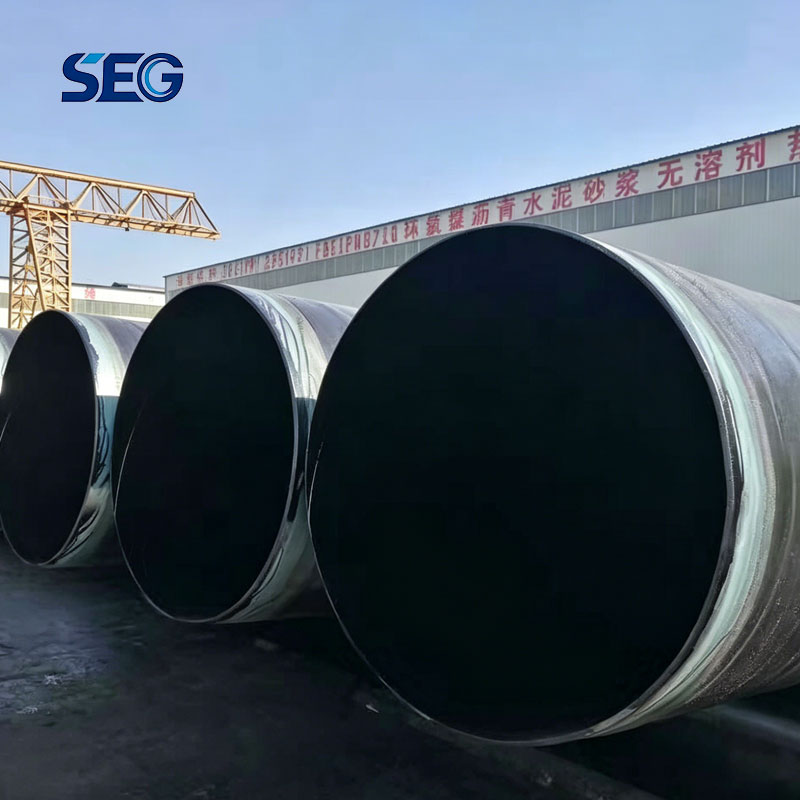
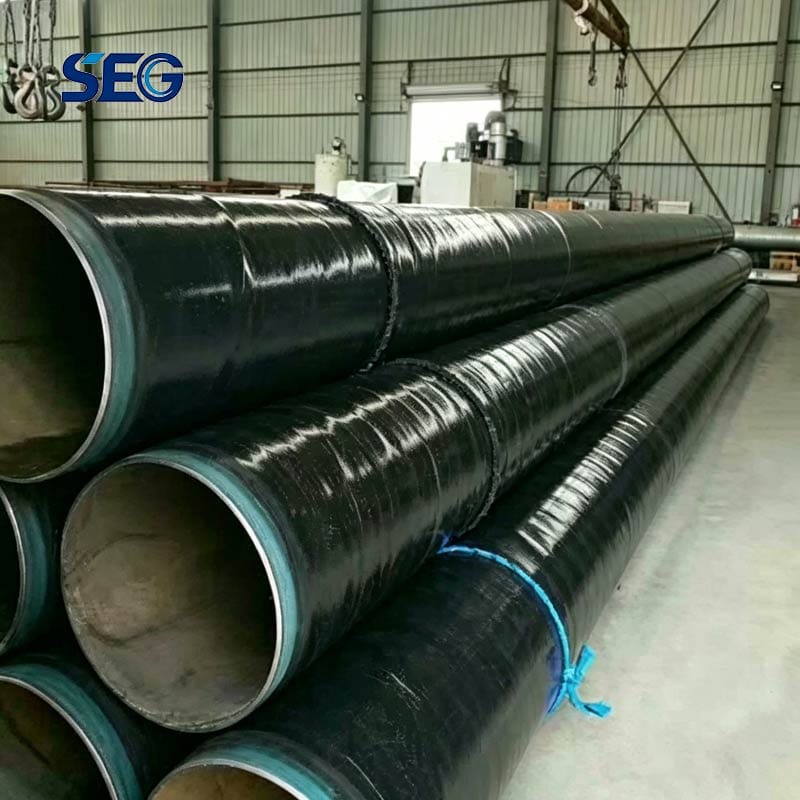
The coating on 3PE steel pipe is a bonded system rather than a single plastic jacket. The first layer is fusion-bonded epoxy, which provides the primary corrosion barrier and adhesion to the prepared steel surface. An adhesive copolymer forms the second layer and connects the epoxy to the polyethylene outer layer. The polyethylene layer provides mechanical and moisture resistance during handling, installation, and service.
The performance of 3PE steel pipe depends on the complete system. A thick outer layer cannot compensate for poor surface preparation, contaminated steel, an unsuitable epoxy cure, weak interlayer adhesion, or careless field-joint work. Procurement documents should therefore define the applicable standard and acceptance tests instead of treating coating color or total thickness as the only quality indicators.
For petroleum and natural-gas transportation applications, ISO 21809-1 covers plant-applied three-layer polyethylene and polypropylene external coatings for buried or submerged welded and seamless steel pipe. The purchaser should confirm whether that scope fits the project and identify any additional project specification that applies.
Define the Service Conditions Before the RFQ
The first 3PE steel pipe specification step is to describe where and how the line will operate. 3PE steel pipe selected for a buried water line may face different design assumptions from pipe used in an oil or gas transmission project. The coating supplier needs enough information to check material selection, application parameters, handling controls, and compatible field-joint solutions.
- Design and operating temperature range, including shutdown and storage extremes.
- Buried, submerged, above-ground, cased, or directional-drilling sections.
- Soil conditions, groundwater exposure, and expected mechanical damage during installation.
- Pipe-laying method, bending requirements, transport route, and storage period.
- Cathodic-protection design interface and electrical continuity requirements.
- Field-joint coating type and compatibility with the factory-applied coating.
Do not assume that a generic 3PE steel pipe datasheet resolves these questions. The project engineer remains responsible for the design basis, while the manufacturer should identify exceptions or production limits before order acceptance. Clear service conditions also make quotations easier to compare because every bidder is responding to the same technical duty.
Specify the Base Steel Pipe Separately
The coating specification and the base specification for 3PE steel pipe should be written as related but separate requirements. Define manufacturing route, grade, product specification level where relevant, outside diameter, wall thickness, length, end finish, dimensional tolerances, testing, and traceability. The current API Specification 5L information describes requirements for seamless and welded line pipe, while ASME B36.10 addresses standardized dimensions for welded and seamless wrought steel pipe.
A buyer considering spiral çelik boru for a large-diameter line should specify the manufacturing standard and weld requirements rather than using “spiral” as a complete material description. Likewise, a reference to dikişsiz çelik boru does not define grade, wall thickness, inspection level, or suitability for the design conditions.
Before finalizing the wall, review the relationship between nominal size, outside diameter, and schedule. Sirgou’s steel pipe schedule guide explains why schedule labels should not replace a dimensional requirement in an RFQ. The 3PE steel pipe order should state the actual outside diameter and wall thickness required by the approved design.
Select the Coating Standard and Layer Requirements
For 3PE steel pipe, state the full designation and edition of the selected coating standard, plus any project amendments. Avoid writing only “three-layer PE coating” because that phrase does not define surface preparation, materials, application sequence, qualification testing, production testing, repair limits, or documentation. If project requirements differ from the referenced standard, list the deviation explicitly and resolve it before production.
The material submittal for 3PE steel pipe should identify the epoxy, adhesive, and polyethylene system intended for the operating range. Purchasers should request the coating procedure and the relevant product data needed by their specification. The review should also cover application temperature control, time between layers, cutback preparation, holiday detection, adhesion testing, and rules for coating repair.
Factory coating does not complete the corrosion-protection system at welded joints. Field joints, bends, fittings, repairs, and transitions require compatible solutions. ISO 21809-3 addresses field-joint coatings within its stated pipeline scope. The project should coordinate the factory-applied 3PE steel pipe coating with the approved field-joint procedure instead of selecting each in isolation.
Set Coating Thickness and Pipe-End Requirements
Coating thickness for 3PE steel pipe should come from the applicable standard, pipe size, installation risk, operating conditions, and project specification. A purchasing note that asks for “standard thickness” is ambiguous. State the required minimum or class, how thickness will be measured, the permitted local variation, and the treatment of weld seams or surface irregularities.
Bare ends need equal attention. The cutback length, bevel geometry, exposed steel condition, and transition from full coating to the pipe end affect welding, field-joint preparation, and inspection. If an automatic welding system, internal clamp, induction heating process, or specific field-joint sleeve is planned, confirm the required geometry before ordering 3PE steel pipe.
The RFQ should also define whether the ends require caps, temporary protection, rust prevention, identification markings, or special handling. Pipe ends damaged by loading can delay fit-up even when the coating itself remains acceptable.
Build Inspection and Testing into the Purchase Order
Inspection requirements for 3PE steel pipe should be agreed before production, not added after the pipe is coated. The inspection and test plan should show hold points, witness points, test frequency, acceptance criteria, record format, and the party authorized to release the product. Requirements must remain consistent with the selected coating and base-pipe standards.
- Incoming steel-pipe identification and traceability review.
- Surface condition, cleanliness, profile, and preheating controls.
- Coating material batch identification and storage records.
- Layer application and temperature records where required.
- Total coating thickness measurements and mapped results.
- Holiday detection, adhesion testing, and visual inspection.
- Cutback dimensions, marking, repair records, and final release documents.
Cathodic-disbondment behavior, impact resistance, indentation, elongation, and other qualification or production tests may apply depending on the governing document. The buyer should use the test methods and conditions specified by that document rather than combining unrelated limits. Materials guidance from AMPP’s corrosion-control publications also reinforces why coating integrity and compatibility with cathodic protection deserve system-level review.
Compare the Coating Options for the Actual Project
3PE steel pipe is one option within a wider family of corrosion-control solutions. Selection of 3PE steel pipe should follow the approved project design, service temperature, installation method, field-joint strategy, and lifecycle requirements. The following comparison is a screening aid, not a substitute for engineering evaluation.
| Coating option | Typical decision driver | Key limitation to review |
|---|---|---|
| Three-layer polyethylene | Mechanical protection combined with an epoxy-based corrosion barrier for buried service | Field-joint compatibility, temperature range, and handling procedures must be defined |
| Fusion-bonded epoxy | A thinner coating system where project specifications and handling controls support it | Impact and abrasion exposure during transport and installation require careful assessment |
| Three-layer polypropylene | Projects requiring a higher service-temperature capability than polyethylene can provide | Application, bending, repair, and field-joint requirements may differ |
| Other plastic-coated pipe | Fluid service or project-specific internal or external protection | The coating type must be matched to media, temperature, adhesion, and joining method |
For some fluid-handling projects, a plastic-coated steel pipe may address a different internal or external protection requirement. It should not be treated as automatically interchangeable with 3PE steel pipe. Define which surface is coated, the intended media, temperature, joining method, and applicable tests before comparing alternatives.
Protect the Coating During Handling and Delivery
A compliant 3PE steel pipe coating can still be damaged between the production line and the trench. The purchase order should define lifting equipment, separator materials, stacking height or method, securing arrangements, inspection after transport, and acceptable repair procedures. Bare chains, sharp supports, dragging, and uncontrolled contact between coated pipes can create defects that are difficult to see during unloading.
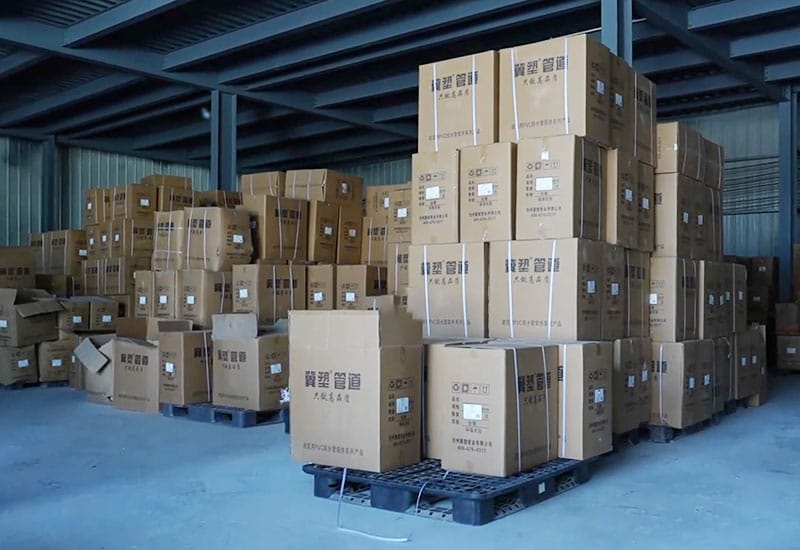
For export shipments, agree on bundle or loose-loading arrangements, end protection, marking, packing lists, and photographic records. Each 3PE steel pipe should remain traceable to its base-pipe and coating records. If the route includes multiple transfers, specify who inspects at each custody change and how transport damage is reported.
Use a Complete RFQ Checklist
A concise 3PE steel pipe RFQ can still be technically complete when it separates mandatory information from supplier proposals. Use the following checklist before sending an inquiry for 3PE steel pipe:
- Project service, location, design temperature, and installation method.
- Quantity, pipe standard, manufacturing route, grade, diameter, wall, length, and ends.
- Coating standard and edition, coating class or thickness, color if relevant, and project amendments.
- Cutback dimensions, bevel, field-joint coating interface, bending, and repair requirements.
- Inspection and test plan, witness requirements, acceptance criteria, and third-party inspection scope.
- Required documents: certificates, inspection reports, traceability list, packing list, and release note.
- Marking, end protection, handling, storage, transport, and delivery conditions.
- List of deviations to be declared with the quotation rather than after order placement.
Attach the applicable technical specification instead of copying isolated clauses without context. Ask the supplier to return a clause-by-clause response and a clearly identified deviation list. This approach makes a 3PE steel pipe quotation easier to evaluate and reduces the risk of discovering incompatible assumptions during inspection or shipment.
Frequently Asked Questions
Is 3PE the same as fusion-bonded epoxy?
No. 3PE steel pipe uses an epoxy layer, an adhesive layer, and a polyethylene outer layer. Fusion-bonded epoxy used by itself is a different coating system with its own specification and handling considerations.
Can the coating specification replace the base-pipe specification?
No. A 3PE steel pipe coating document controls coating-related requirements within its scope. The base pipe still needs a defined manufacturing standard, grade, dimensions, inspection level, end finish, and traceability requirements.
What information is most often missing from an RFQ?
Common gaps in a 3PE steel pipe RFQ include service temperature, coating standard edition, thickness class, cutback geometry, field-joint compatibility, inspection frequency, repair acceptance, documentation, and transport controls. These items should be settled before 3PE steel pipe production starts.
Should every buried pipeline use the same coating thickness?
No. The required 3PE steel pipe coating construction depends on the governing standard, pipe size, service conditions, installation exposure, and project specification. The design authority should select and document the applicable requirement.
What documents should arrive with coated pipe?
The exact 3PE steel pipe document package depends on the contract, but it commonly includes base-pipe certificates, coating material traceability, production inspection results, repair records, dimensional or cutback checks, release documentation, and a pipe list linking markings to records.
Discuss Your Pipeline Specification
A technically useful inquiry gives both sides enough information to identify exceptions early. Review Sirgou’s pipeline material selection guidance, then i̇letişim Sirgou with the base-pipe specification, coating document, dimensions, quantity, service conditions, inspection requirements, and delivery destination. The team can review the requested 3PE steel pipe configuration and identify the details that still need clarification before quotation.